

Is Tbilisi Safe for Tourists?
By Wayscore Travel Desk · Updated October 1, 2026 · Last reviewed October 4, 2026
Quick answer
Yes, Tbilisi is one of the safer and most welcoming capital cities in the region for visitors. The US State Department rates Georgia Level 1: Exercise normal precautions, its lowest level, with a specific warning limited to the Russian-occupied regions of South Ossetia and Abkhazia, far from Tbilisi. Day to day, the main risks are petty theft and the occasional taxi overcharge, not violent crime.
The official travel advisory
The State Department's advisory for Georgia, last updated March 12, 2025, sits at Level 1 and describes Georgia as generally a safe destination for travelers. It carries one specific do-not-travel designation: the Russian-occupied Georgian regions of South Ossetia and Abkhazia, due to the risk of crime, unrest and landmines.
Tbilisi's current level on the US State Department's 4-step scale.
Tbilisi sits well outside those occupied regions, in the heart of the country, and is not covered by that specific warning. The advisory otherwise offers only general travel guidance, reflecting Georgia's reputation as a notably safe and hospitable country for tourists.
Safest areas to stay in
Tbilisi's historic core is compact and walkable, and most central districts are comfortable to explore on foot, including after dark.
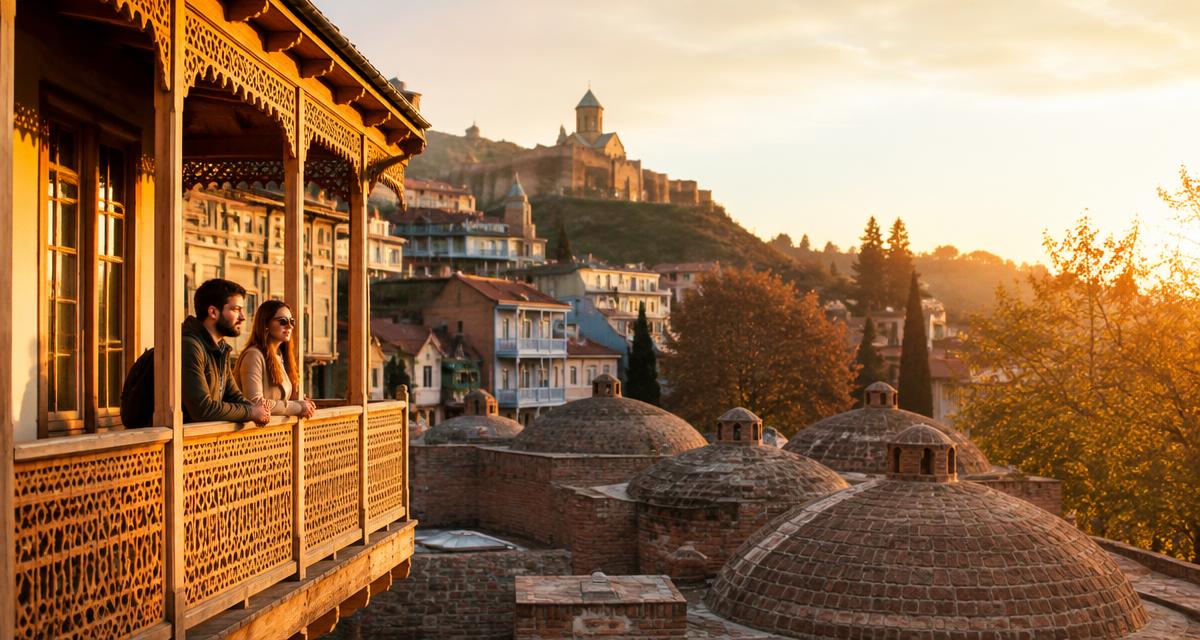
Old Tbilisi (near the sulphur baths)
Balconied streets, the Narikala fortress above, and the baths themselves; busy and well trodden by tourists.
Sololaki
Characterful old apartment buildings, central and walkable, popular with longer-stay visitors.
Vake
Leafy, upscale, quieter, a short taxi ride from the center.
Vera
Calm residential streets close to Rike Park and the cable car.
Where to take extra care
Rustaveli Avenue during protests
Georgia has seen periodic political protests in recent years, mostly centered on this avenue; avoid demonstrations as a bystander even if they appear peaceful.
Taxi ranks near the train station
Unmetered drivers sometimes overcharge tourists; use an app like Bolt or Yandex Go instead.
The real risks, ranked
| Risk | How likely | How to avoid it |
|---|---|---|
| ● Taxi overcharging | Common without an app | Use Bolt or Yandex Go, which show the fare upfront, rather than hailing a street taxi. |
| ● Pickpocketing in markets and on minibuses | Occasional | Keep bags zipped in crowded areas like Dry Bridge Market and on marshrutka minibuses. |
| ● Political demonstrations | Periodic | Avoid Rustaveli Avenue and government buildings during planned protests; monitor local news. |
| ● Do-not-travel regions | Not relevant to Tbilisi itself | South Ossetia and Abkhazia carry a US do-not-travel designation; these are far from Tbilisi and not part of a typical visit. |
| ● Overindulging at a supra (feast) | Common | Toasting culture involves a lot of wine and chacha; pace yourself and eat throughout the meal. |
| ● Uneven, steep streets in the old town | Common | Wear sturdy shoes; cobblestones and hills around Narikala can be slippery when wet. |
Stay in Old Tbilisi or Sololaki to be close to the baths, restaurants and the cable car up to the fortress.
Affiliate links: we may earn a commission if you book, at no extra cost to you.
8 safety tips that actually matter
- 1.Use Bolt or Yandex Go for taxis rather than hailing one on the street.
- 2.Keep bags zipped on marshrutka minibuses and at crowded markets like Dry Bridge.
- 3.Avoid joining or lingering near any political demonstration, even if it looks calm.
- 4.Carry some cash; smaller guesthouses and family-run restaurants may not take cards.
- 5.Pace yourself at a traditional supra; multiple toasts with wine or chacha are customary.
- 6.Wear sturdy, comfortable shoes for the old town's steep cobblestone streets.
- 7.Learn a few basic Georgian or Russian phrases; English is less common outside the main tourist areas.
- 8.Save Georgia's universal emergency number: 112.
Is Tbilisi safe for solo female travelers?
Tbilisi is considered a comfortable city for women traveling solo, including walking in central neighborhoods at night. Georgian hospitality culture means strangers, especially older locals, may be unusually warm or invite you to join a meal; using normal judgment about accepting invitations is sensible, as it would be anywhere. Public transport and taxis via app are reliable, and most solo female travelers report feeling safe exploring the old town and surrounding districts independently.
Frequently asked questions
Is Tbilisi safe for tourists?+
Yes. Georgia is rated Level 1 by the US State Department, its lowest advisory level, and Tbilisi has low rates of violent crime. The only specific warning applies to the occupied regions of South Ossetia and Abkhazia, far from the capital.
Is it safe to travel near South Ossetia or Abkhazia?+
No, these are under a US do-not-travel designation due to crime, unrest and landmines. They are not part of a typical Tbilisi visit and require separate planning if visited at all.
Is it safe to use marshrutka minibuses in Tbilisi?+
Generally yes, and they're a cheap, common way to get around, though it's worth keeping bags zipped and close in crowded conditions.
Can you drink the tap water in Tbilisi?+
Yes, Tbilisi's tap water is generally considered safe and comes from mountain springs.
Is Tbilisi affordable?+
Yes, it's one of the best-value capital cities in Europe for food, wine and accommodation.
Sources
- US Department of State, Georgia Travel Advisory (updated March 12, 2025)
- Georgian National Tourism Administration, official visitor information
- Tbilisi City Hall tourism office, visitor safety guidance
- Wayscore score methodology
Safety conditions change. Always check the latest official advisory before you travel.